Residual Income Vs Traditional Income: Why the Difference Matters

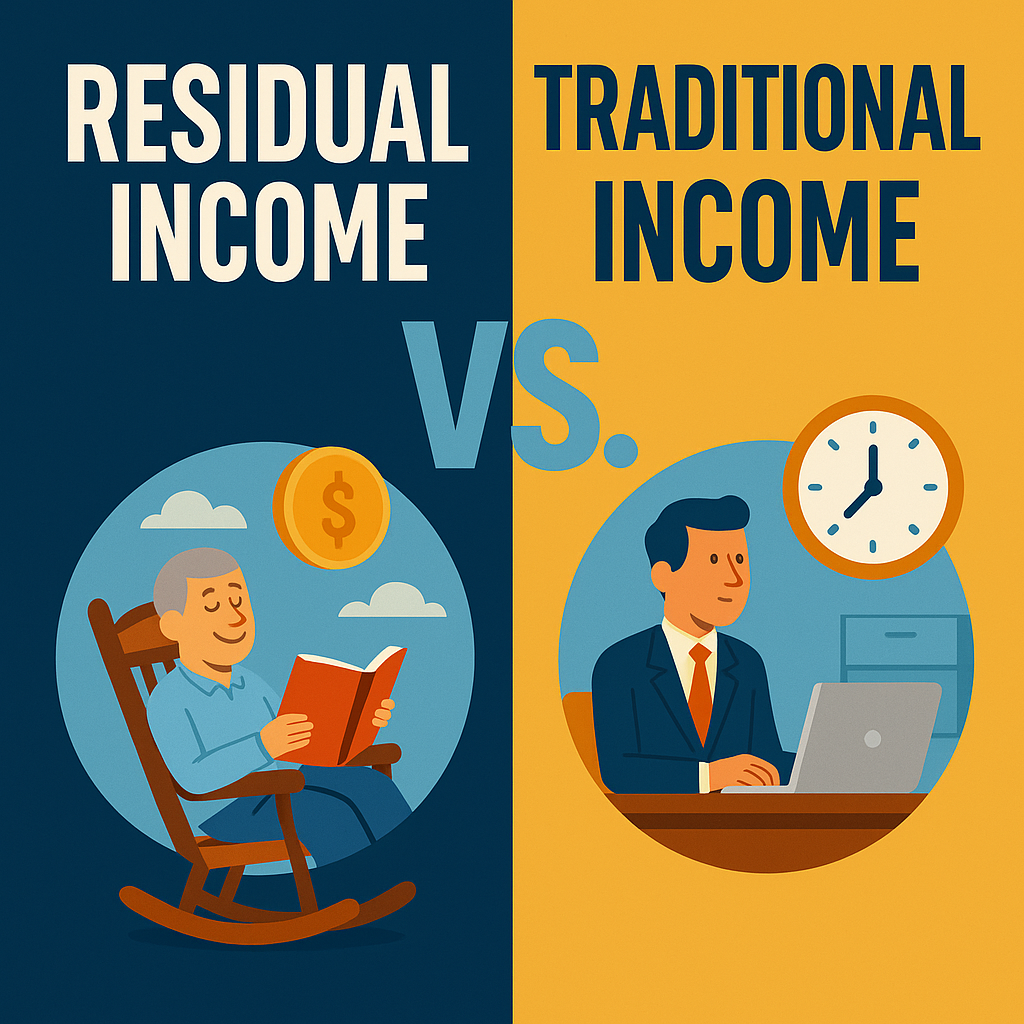
If your income stops the moment you stop working, you are still trading time for money. That can work for a while, but it can also create stress if you lose a job, get sick, need to slow down, or simply want more control over your life.
“Profits are better than wages. Wages make you a living; profits make you a fortune.” — Jim Rohn
The difference between residual income and traditional income is not just about money. It is about control, flexibility, and how much of your future depends on your next hour of work.
For a broader overview, read Understanding the 3 Types of Income. This article focuses on the difference between traditional income and income that can continue after the initial work is done.
What Is Traditional Income?
Traditional income is what most people are familiar with. You work, and you get paid. It may come from a job, hourly wages, salary, commissions, freelance work, or self-employment.
Traditional income is not bad. It is useful, familiar, and often necessary. It pays bills, builds stability, and gives you a starting point. The limitation is that it usually depends on your continued labor.
Common limits of traditional income include:
- It is capped by the number of hours you can work.
- It requires constant effort to maintain.
- It can be disrupted by illness, layoffs, caregiving needs, burnout, or age.
- It can make retirement feel risky if you have not built other sources of income.
Even many self-employed people and freelancers fall into this pattern. They may not have a boss, but if they still have to work every billable hour to get paid, they are still relying mostly on active income.
What Is Residual Income?
Residual income is money that can continue after the first work is done. It is closely related to passive income, though in everyday business language people often use the terms in slightly different ways.
A simple way to think about it is this: traditional income pays you for current effort, while residual income may keep paying from an asset, system, product, or customer relationship you already built.
Residual income can come from:
- Royalties from books, music, or digital products
- Affiliate marketing or recurring affiliate commissions
- Membership sites or subscription-based products
- Rental properties or rented equipment
- Dividend-paying investments
- Digital products, courses, or downloads sold repeatedly over time
There is an important tax note here. The IRS does not treat every “passive” sounding income source the same way. For example, the IRS says portfolio income includes interest, dividends, annuities, and royalties not derived in the ordinary course of a trade or business. So this article is using practical business language, not giving tax advice.
Residual Income Is Not Easy Money
The phrase “earn while you sleep” is appealing, but it can also be misleading. Residual income usually requires serious upfront effort.
You may need to create content, build an audience, choose the right product, write emails, make videos, learn search engine basics, serve customers, or improve your offer over time. The income may become more flexible later, but the work does not disappear at the beginning.
That is why a good residual income strategy should be honest. It should not promise instant results. It should give you a path where the work you do today has a chance to keep producing value later.
Why Residual Income Offers More Freedom
Residual income gives you freedom in ways traditional income often cannot. When set up properly, residual income can help you:
- Take time off without every dollar stopping immediately
- Earn from work you already completed
- Build something that can grow beyond your personal hours
- Reduce dependence on one job, one paycheck, or one client
- Create more breathing room in retirement or semi-retirement
This does not mean residual income is guaranteed. It simply means the structure is different. You are trying to build assets, systems, and relationships that can keep working after the first effort is complete.
How to Get Started
You do not need a financial degree or a giant bankroll to begin building residual income. Start where you are and choose something that fits your budget, skills, and personality.
- Write a short eBook or create a simple downloadable product.
- Start a blog, YouTube channel, or niche website around a useful topic.
- Learn affiliate marketing and promote products that fit your audience.
- Create an email list and learn how to use email as an affiliate marketer.
- Invest consistently in diversified assets if that fits your financial situation and risk tolerance.
- Build a simple digital product that can be sold more than once.
Every small step adds up. Consistency over time is key, especially when you are building something that may not pay off immediately.
Think Like an Asset Builder
The shift is simple, but powerful: stop thinking only about what pays you today and start thinking about what can keep creating value tomorrow.
A blog post, email list, digital product, affiliate review, course, membership, or small investment habit may not feel huge at first. But if it keeps working, keeps attracting people, or keeps compounding, it can become part of a stronger financial foundation.
Your Next Step
If you are serious about supplementing your income or preparing for a more resilient retirement, residual income is worth understanding. It may not replace your paycheck right away, but it can give you a new direction.
Start with one small asset. Build one useful page. Create one product. Learn one affiliate strategy. Save or invest one manageable amount. Then repeat.
If building another source of income is part of your plan, you can also compare these ideas with the opportunity I’m currently featuring below.
Explore the opportunity featured below.