Understanding the 3 Types of Income (and Why It Matters for Your Financial Future)

If you are serious about improving your finances, whether you are working full-time, building a side hustle, or navigating retirement, you need to understand the different types of income. Most people focus heavily on earned income from a job or self-employment, but that is only one piece of the puzzle.
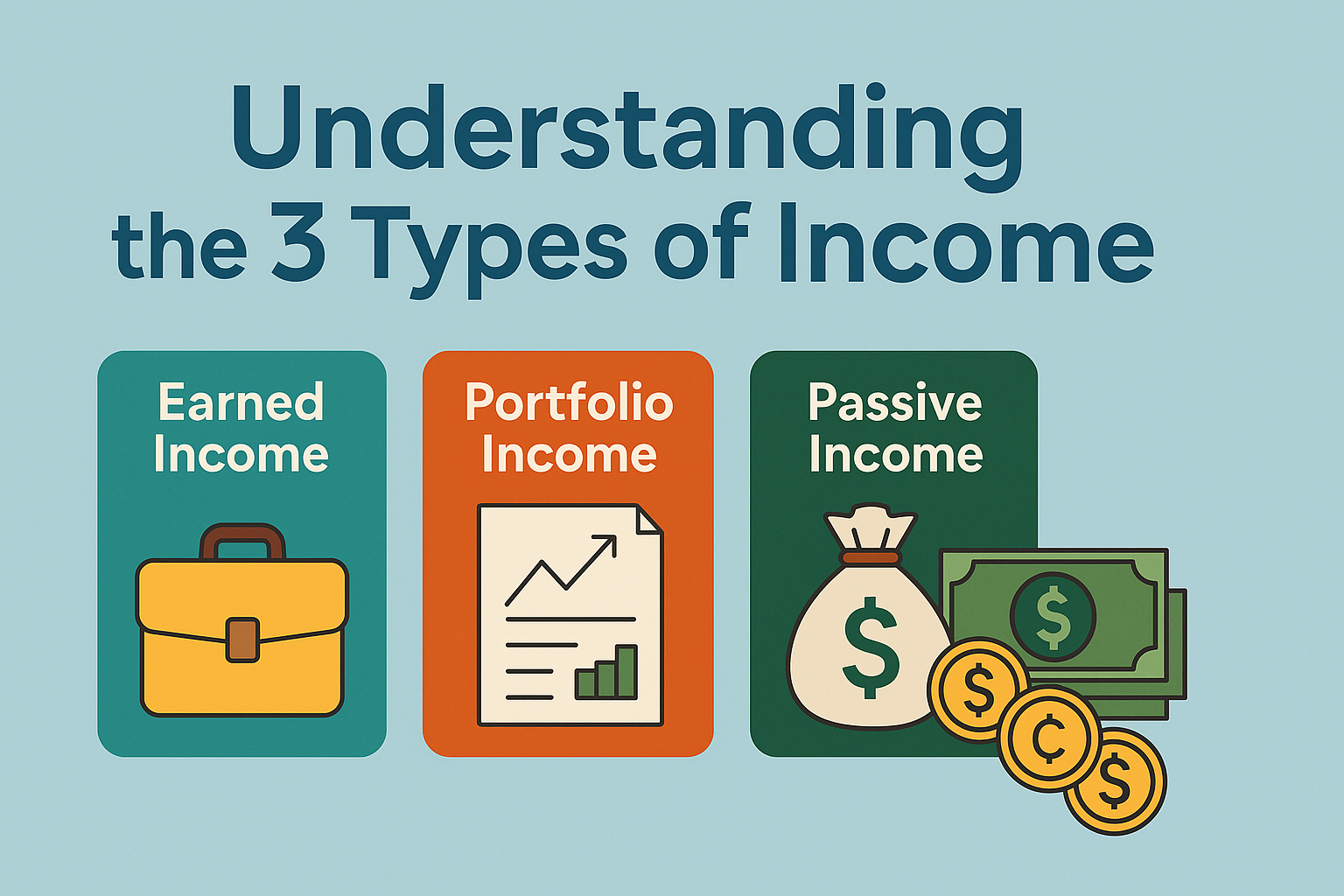
To build more financial flexibility over time, it helps to understand how earned income, portfolio income, and passive income can work together. Each one has strengths. Each one has limits. The goal is not to abandon earned income overnight. The goal is to gradually build more income that is not tied directly to every hour of your day.
One important note: these are practical categories for understanding your money. Tax rules can define income differently. For example, the IRS separates portfolio income such as interest, dividends, annuities, and royalties from passive activity income, so always check with a qualified tax professional for tax-specific advice.
1. Earned Income, Also Called Active Income
Earned income is the type most people know best. It includes wages, salaries, tips, commissions, freelance pay, and self-employment income. In simple terms, it is money you earn by trading your time, effort, or skill for pay.
Examples of earned income include:
- A full-time job
- Freelance writing or design work
- Consulting gigs
- Delivery, rideshare, or other service work
Earned income is useful because it can be predictable. It pays the bills and gives you a foundation. The downside is that if you stop working, the income usually stops too.
That is why earned income alone can feel limiting. There are only so many hours in a day, and as life changes, you may not always want or be able to keep trading more time for more money.
Key takeaway: Earned income is important, but it is not enough by itself if your goal is more freedom and flexibility.
2. Portfolio Income
Portfolio income is money generated from investments. In everyday financial planning, this can include dividends, interest, investment distributions, and capital gains from assets held for investment.
Examples of portfolio income include:
- Dividends from investments
- Interest from savings, bonds, and similar investments
- Capital gains from investments held for investment
- Certain royalties and investment distributions
Many people assume portfolio income is only for the wealthy, but that is not true. Even small, consistent investments can help you start building the habit. The power comes from consistency, reinvestment, and time.
Investor.gov defines compound interest as interest paid on both principal and accumulated interest. That is why small amounts can grow more meaningfully over time when you keep contributing and reinvesting instead of constantly pulling the money back out.
For retirees or people approaching retirement, portfolio income can provide extra breathing room alongside Social Security, pensions, retirement accounts, or part-time work. It is not magic, but it can help your money do some of the work your body used to do.
Key takeaway: Portfolio income makes your money work for you. You can start small and build over time.
3. Passive Income
This is the type of income that gets the most attention, but it is also the most misunderstood. Passive income is often described as money that continues to come in after the initial work is done. In practical online-business terms, it usually means building an asset or system that can keep earning after the first effort is complete.
Examples of passive or semi-passive income can include:
- Royalties from books, music, or digital products
- Affiliate marketing
- Online courses, memberships, or downloadable products
- Rental property or equipment
- Monetized blogs, YouTube channels, or niche websites
- Residual commissions from carefully evaluated network marketing or affiliate programs
Now let’s be real: passive income is not instant. It usually takes a lot of work upfront. You may need to create content, build trust, choose the right offer, learn basic marketing, or improve your website over time.
Also, what people casually call passive income is not always classified as passive income for tax purposes. A business can keep producing revenue after the initial work and still be treated differently under tax rules depending on how actively you participate in it.
Once the systems are in place, though, passive or residual income can give you more flexibility. It may keep working while you are away from the computer, spending time with family, enjoying hobbies, or actually enjoying retirement.
If you are building an online business or side hustle, passive income can be part of the long-term goal, but it should not be sold as effortless money.
Key takeaway: Passive income is about building assets, not avoiding work. The work comes first, the leverage comes later.
How These Income Types Work Together
The goal is not to pick only one type of income. A healthier financial life often comes from combining them.
- Earned income can cover today’s bills.
- Portfolio income can help your savings and investments grow over time.
- Passive or residual income can give you more flexibility and reduce dependence on one paycheck.
This is especially important for retirees, near-retirees, and aspiring entrepreneurs. If you rely on only one income source, a job loss, health issue, market shift, or family emergency can create real stress.
Why This Matters for Retirees and Side Hustlers
If most of your financial support comes from one source, whether that is income from a job or self-employment, Social Security you earned through years of work, or retirement savings, one disruption can create real stress. Adding other income streams can create options.
More income flexibility can mean less stress about rising prices, more ability to travel or help family, more freedom to say no to work that does not serve you, and more confidence during uncertain times.
Even if you are starting later in life, it is not too late to begin. Many people in their 50s, 60s, and 70s are building digital products, investing small amounts, and creating businesses that can earn without burning them out.
Your Next Step
Take a look at your current income sources. Are they all active income? Could you begin shifting some time or money toward portfolio income, passive income, or a side business that has the potential to keep working later?
You do not have to overhaul your life overnight. Small, consistent moves such as creating a blog, starting a side business, learning affiliate marketing, or investing a modest amount can start building momentum.
For a deeper look at the difference between active work and income that can continue later, read Residual Income Vs Traditional Income: Why the Difference Matters.
If building another source of income is part of your plan, you can also take a look at the opportunity I’m currently featuring below.
Explore the opportunity featured below.