How to Evaluate an MLM Business Opportunity Before Joining

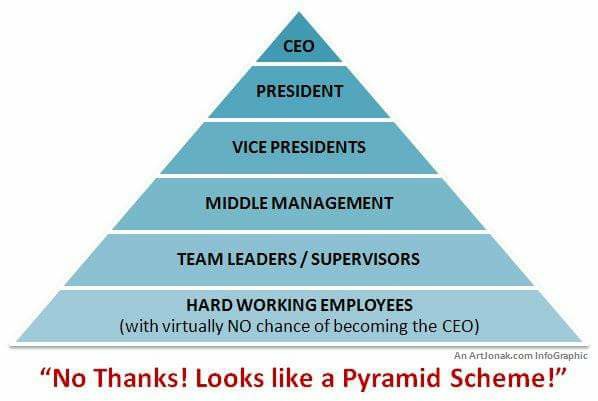
The internet is still full of business opportunities that promise freedom, flexibility, and extra income. Some are legitimate. Some are overhyped. Some are structured in ways that make it very hard for the average person to earn a profit. That is why you should be skeptical before joining any MLM or network-marketing opportunity.
Do not let excitement replace investigation. A polished presentation is not the same as proof, and a recommendation from someone you trust does not remove the need to examine the details for yourself. This checklist is for evaluating an MLM or network-marketing opportunity before you join. For broader context, read about the common structural problems that can occur in MLM programs.
Keep Income Claims in Perspective
Do not confuse gross commissions, testimonials, or opportunity projections with likely profit after costs. In its review of 70 public MLM income disclosures, the FTC found that many participants received no payments, the vast majority received $1,000 or less per year, and many disclosures left out important information about low or zero earners and expenses. The FTC also offers a plain-language guide to MLM and pyramid-scheme warning signs.
A Practical MLM Due-Diligence Checklist
Promises are easy; written policies tell you what the company is actually offering. Before you enroll, collect the facts, put the numbers on paper, and give yourself time to think.
1. Identify the Legal Company and Its Leadership
Write down the company’s exact legal name, not only its brand name, and identify its owners and senior executives. Search the business-registration database maintained by the Secretary of State or comparable agency where the company says it is organized. Confirm that the entity is active and that the names and addresses are consistent with the company’s official documents.
A physical address, working telephone number, and verifiable company history are useful identification and contact points. They do not prove legitimacy or profitability. Likewise, an older company has a longer record to investigate, but age alone does not make its products valuable or its opportunity suitable for you.
2. Collect the Official Documents
Do not rely only on a presentation, webinar, social-media post, or conversation with a recruiter. Ask for current copies of:
- The compensation plan
- The income disclosure statement, when one exists
- Policies and procedures
- The participant or distributor agreement
- Refund, cancellation, and inventory-buyback terms
- Product-return and customer-refund policies
- Rules governing advertising, income claims, and use of the company’s name
Save dated copies. These documents show the company’s stated terms; compare them with actual practice and typical-result information.
3. Understand the Compensation Plan
Trace how money moves through the plan. Look at how the plan actually rewards people. Does it encourage genuine product demand and sales to ultimate users, or does it push participants toward recruiting, personal purchases, rank chasing, or downline volume just to remain eligible for rewards?
A complicated compensation plan can hide important details. Ask someone to explain in plain language what must happen before you receive a commission, what causes a commission to be reduced or withheld, and whether your customers or team must keep ordering for you to remain qualified. Obtain the explanation in writing when it affects your decision.
4. Review the Income Disclosure Carefully
When an income disclosure exists, look beyond the headline average. Determine who is included, who is excluded, and whether the figures cover all participants or only those labeled “active.” Check whether zero earners are counted, whether the period is a full year, and whether the document presents gross commissions before expenses.
The FTC’s MLM business guidance explains that earnings information should account for what participants generally earn and their typical expenses. A top-earner story can be true and still tell you very little about the typical outcome.
5. List Every Cost
Start with the enrollment fee or starter kit, but do not stop there. Build a monthly and annual cost estimate that includes:
- Membership and renewal fees
- Required or strongly encouraged product purchases
- Autoship and personal-volume requirements
- Websites, apps, lead systems, and other software
- Training, books, events, travel, and lodging
- Samples, shipping, returns, and customer refunds
- Advertising, payment-processing, and general business costs
- Purchases or volume needed to maintain rank or commission eligibility
Compare those costs with realistic revenue, not the best presentation example. The article about paying for MLM autoship when you are not making money explains why recurring qualification purchases deserve special attention.
6. Evaluate the Product Without the Opportunity
Ask a simple question: Would a reasonable customer buy this product at its normal price without any interest in the income opportunity?
Consider usefulness, quality, price, shipping, guarantees, and reasonable alternatives. Look for genuine product demand from people buying because they want the product, not primarily because they need volume, rank, or qualification. Product enthusiasm is welcome, but personal enthusiasm does not by itself establish broad demand.
7. Identify Qualification and Purchase Requirements
Find every rule involving autoship, personal volume, customer volume, team volume, rank maintenance, active status, or required purchases. Ask what happens if you skip a month, return a product, lose a customer, or fail to maintain a rank. A low enrollment fee can be misleading when staying eligible requires continuing expenses.
8. Verify Income and Lifestyle Claims
Ask for the written basis behind claims about income, debt reduction, replacing a job, travel, cars, or working only a few hours a week. Compare the claim with the official income disclosure and remember to subtract expenses. Gross commissions are revenue; profit is what remains after legitimate business costs.
Personal experiences still matter. Current and former participants can reveal sales pressure, unexpected expenses, training culture, support quality, inventory problems, and cancellation difficulties. Ask about both positive and negative experiences. Just remember that one person’s story, successful or unsuccessful, does not establish what normally happens.
Company-selected success stories can be inspiring, but they should not replace compensation documents, cost analysis, and typical-outcome information. If you are working hard and the numbers still do not add up, the discussion of why effort does not always translate into MLM profit may help you examine the business model as well as your own activity.
9. Check Refunds, Cancellation, Buybacks, and Termination
Read the deadlines, conditions, restocking fees, shipping responsibilities, and exclusions. Determine whether opened products can be returned, whether inventory is repurchased, and what happens to pending commissions after cancellation.
Also review the company’s right to suspend or terminate an account and its ability to change products, prices, policies, territories, or the compensation plan. You may operate independently, but you do not control the company or its rules.
10. Search for Official Actions and Complaint Patterns
Search the FTC cases and proceedings database, state attorney general and consumer-protection resources, and other relevant public records. Look for the legal company name, brand names, owners, and executives.
Complaints alone do not prove wrongdoing. Look for documented patterns involving the same fee, claim, cancellation problem, or policy, then consider company responses, written terms, lawsuits, and official actions.
11. Decide Whether It Fits Your Life
An opportunity can be legal and still be wrong for you. Compare the required budget, time, skills, audience, sales activity, and financial risk with what you can realistically provide. Do not commit money needed for housing, food, medical care, debt payments, or other essential obligations.
Think about the work itself. Are you willing to find customers, follow up, answer questions, create content, handle rejection, and comply with advertising rules? If you are deciding between business models, compare affiliate programs and network marketing before committing.
Use AI to Help With Your MLM Due Diligence
AI can be useful for organizing a pile of compensation-plan documents, policies, disclosures, and notes. Copy the prompt below, then give the AI the company name and the official information you have collected.
Try this AI prompt:
I’m evaluating an MLM or network-marketing opportunity and want to do proper due diligence before joining.
Help me review it using these areas:
- Company ownership and leadership
- Compensation plan
- Income disclosure
- Enrollment and recurring costs
- Autoship or volume requirements
- Product pricing and real customer demand
- Recruiting expectations
- Refund, cancellation, and buyback policies
- Rank and commission qualification rules
- Legal or regulatory history
- Realistic profit after expenses
I will provide the company name and any official documents, links, compensation-plan details, income disclosures, or policies I can find.
Separate verified facts from assumptions. Flag anything that is unclear, missing, unusually complicated, or potentially risky. Do not assume that testimonials or top-earner examples represent typical results.
At the end, give me:
- The strongest points
- The biggest concerns
- Questions I should ask before joining
- Information I still need to verify
- A simple overall risk assessment based only on the evidence provided
AI can help you organize the information, but do not let it replace your own judgment. Verify important claims against the company’s official documents and reliable outside sources.
Slow Down Before You Sign Up
Urgency, friendship, fear of missing out, and same-day enrollment pressure are not substitutes for evidence. Take a cooling-off period. Read the documents away from the presentation. Ask follow-up questions and get important claims in writing.
If the opportunity cannot survive a few days of careful investigation, that tells you something. The dream may be real, but the numbers still need to make sense.
“We must know what the world needs first, and then invest ourselves to supply that need.”
Russell H. Conwell, Acres of Diamonds
Apply the Same Standards to Any Recommendation
A healthy dose of skepticism is your best defense in a marketplace full of empty promises. Ask the hard questions. Look beneath the surface. Protect your time, your money, and your dreams.
The goal is not to chase hype. It is to choose a model that fits your budget, your comfort level, your values, and your long-term plans.
Once you’ve worked through this checklist, use the same standards on any opportunity you’re considering, including the one I’m currently featuring below. Don’t lower your standards just because somebody you trust recommends it.
Explore the opportunity featured below.