How to Choose the Right Side Hustle for You


Why Most Side Hustle Advice Misses the Mark
Search for “best side hustles” and you’ll find endless lists: freelancing, affiliate marketing, delivery apps, blogging, YouTube, digital products, network marketing, online services, and dozens more.
The problem is that a list of ideas does not tell you which one is right for you.
A side hustle can sound exciting and still be a poor fit for your schedule, skills, budget, personality, or income goals. It can also match your interests perfectly and still fail because there is no real demand for what you are offering.
So instead of chasing whatever is popular this month, I think it makes more sense to use a simple process: find ideas that fit you, test whether people actually want them, then measure whether the numbers and the work make sense.
If you need ideas first, start with my guide to 7 online side hustle ideas to generate extra income. Then come back here and put the best possibilities through this filter.
Step 1: Make a Passion-Skills-Interest (PSI) List
I like starting with what I call a Passion-Skills-Interest, or PSI, list. It helps narrow a huge field of possibilities into ideas you might actually want to work on.
- Passions: What do you genuinely enjoy doing?
- Skills: What are you already good at, or what have you learned through work and life?
- Interests: What subjects do you naturally read about, watch, research, or want to learn?
Look for overlap. A person who enjoys cooking, writes well, and follows nutrition might test a recipe newsletter, a cooking blog, short-form content, or affiliate recommendations for kitchen tools. Someone who likes technology and is good at explaining things might offer setup help, create tutorials, review products, or build a niche information site.
PSI is not a magic formula. Passion does not create customers. But it is a useful first filter because you are more likely to stick with work that uses strengths you already have or develops skills you actually want.
Step 2: Check the Fit With Your Real Life
Before asking how much an idea could make, ask whether it fits the life you already have.
- Time: How many hours can you realistically give it each week?
- Schedule: Does the work need to happen at certain times, or can you do it when you are available?
- Energy: Will you still want to do this after a full workday?
- Budget: What will it cost to start, and what will it cost every month?
- Skills: What can you do now, and what would you need to learn?
- People: Does it require constant client contact, selling, customer support, recruiting, or public-facing content?
If you are a night owl, a side hustle built around early-morning client calls may be miserable. If you hate being on camera, you do not need to build a TikTok business just because somebody says video is the future.
And if you are already working full time, read How to Build a Side Hustle While Working Full Time. A good opportunity is not good for you if the schedule makes it impossible to sustain.
Step 3: Decide What You Want the Side Hustle to Do
Not every side hustle needs to become a full-time business.
Maybe you want an extra $200 or $500 a month. Maybe you want enough to cover a bill, fund vacations, put more into savings, or give yourself more breathing room. A simple service business can be perfectly worthwhile even if it never becomes a giant company.
On the other hand, if your long-term goal is to replace your job, then scalability, repeat customers, systems, margins, and the ability to grow without adding the same amount of work become much more important.
That is why I would not automatically reject an idea because it is “just a gig,” and I would not automatically choose one because somebody calls it passive or scalable. Start with the result you actually want.
If replacing your job is the goal, my article When Should You Leave Your Job for a Side Hustle? covers the much bigger decision of when side income is strong enough to even consider that move.
Step 4: Make Sure There Is Real Demand
This is where passion has to meet reality.
Ask a simple question: Who is going to pay for this, and why?
You do not need a fifty-page business plan to answer it. You do need something better than “I think people would like this.”
Look for signs that people already spend money solving the problem. Study competing services and products. Read questions people ask in relevant communities. Look at reviews and complaints. Talk to people who fit your intended audience.
Different business models prove demand in different ways. A freelancer needs clients willing to pay for a service. An affiliate marketer needs an audience with a problem and products worth recommending. A network marketer needs products people genuinely want and a compensation structure that makes sense. A content creator needs an audience first, then a realistic way to monetize that attention.
If affiliate marketing interests you, see Why Affiliate Marketing Is a Win-Win Online Opportunity. If network marketing is on your list, use the same skeptical business standards I recommend in How to Evaluate an MLM Business Opportunity Before Joining.
Step 5: Know the Costs Before You Chase the Revenue
“I made $300” sounds much better than “I made $300 after spending $275 and working twenty hours.”
Before you start, list the likely costs. That could include software, website hosting, advertising, supplies, platform fees, mileage, payment-processing fees, subscriptions, inventory, training, or equipment.
Then think about your time. I am not saying every new side hustle has to pay you a great hourly rate immediately. Learning and testing take time. But eventually the business has to produce enough value to justify the effort you are putting into it.
Revenue is exciting. Profit is what you actually get to keep.
Step 6: Run a Small Real-World Test
Do not spend six months building the perfect version of an idea before finding out whether anyone wants it.
Run the smallest useful test you can.
- Offer a service to a few real prospects and see whether anyone will pay.
- Create a sample product and show it to the kind of person who might buy it.
- Publish a small piece of content and see what questions or responses it generates.
- Put up a simple offer or landing page and send actual targeted visitors to it.
- Try to make one genuine sale before building a huge catalog.
Friends saying, “That sounds cool,” is not the same as a customer reaching for a credit card.
The goal of the test is not to prove you are a genius. It is to learn. What gets attention? What do people ignore? What objections come up? What is confusing? What do people actually pay for?
Step 7: Measure What Matters
Don’t fall in love with your idea. Fall in love with the results.
Traffic and clicks can be useful, but they are not the finish line. Keep an eye on:
- Sales or paying customers
- Total revenue
- Expenses
- Actual profit
- Hours required
- Repeat customers or repeatable sales
- Whether the work is getting easier as you learn
- Whether you still want to keep doing it
Some ideas need time before the numbers become meaningful. That does not mean you should keep pouring time and money into something indefinitely. Set a reasonable test period, look at the evidence, and decide whether to improve it, change direction, or move on.
Think Like a Business Owner, Even If You Stay Small
You do not need employees, an office, or a huge income goal to think like a business owner.
It means treating your time as valuable, tracking your costs, paying attention to customers, learning from results, and making decisions based on what actually works.
It also means understanding what you are building. Some side hustles mainly trade time for money. Others can create assets such as a customer list, useful content, a website, a reputation, a product, a system, or recurring customer relationships. Neither model is automatically better. They simply serve different goals.
Choose the Side Hustle You Can Actually Build
The right side hustle is not necessarily the one with the biggest income claim or the most exciting success story.
It is the one that fits your life, has genuine demand, makes financial sense, and gives you a realistic reason to keep working on it after the initial excitement wears off.
Start with your PSI list. Add the practical filters of time, cost, demand, profit, and customer acquisition. Run a small test. Then let real results tell you what deserves more of your attention.
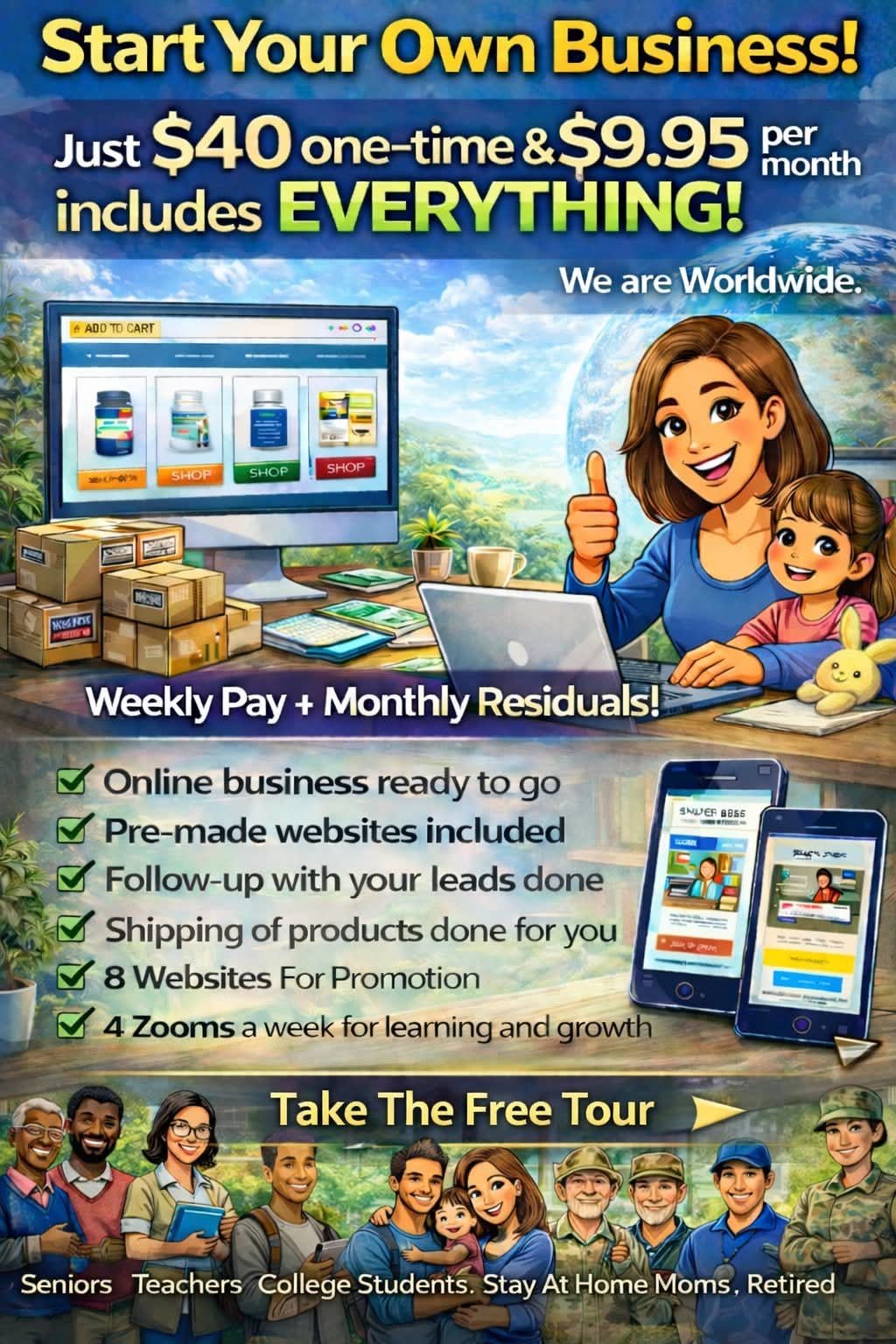
Once you know what you are looking for, you can use the same checklist to evaluate the opportunity currently featured below. Decide whether it fits your skills, schedule, budget, goals, and the kind of business you actually want to build.
Explore the opportunity featured below.










I’ve been thinking about doing something on the side, but I keep talking myself out of it because I don’t want another job that takes over my life. This gave me a few things to think about.
That’s exactly why I think the fit matters. A side hustle shouldn’t automatically turn into a second full-time job unless that’s what you want. Start small, see how it works with your schedule, and go from there.
Budget is the part people leave out. Some side hustles sound cheap until you add software, supplies, gas or advertising. Looking at the real cost before jumping in can save a lot of frustration.
Absolutely. Startup cost isn’t just the advertised price. The little recurring expenses can be what turns a decent idea into a bad fit.
This is better than another giant list of side hustles. Whether something fits your schedule and personality matters more than whether somebody online says it’s the hottest idea this month.
That’s exactly it. A great opportunity for somebody else can still be a bad fit for you. I’d rather see someone choose something sustainable than chase whatever is trending.