The Penny’s Demise: What the Founders Warned Would Happen
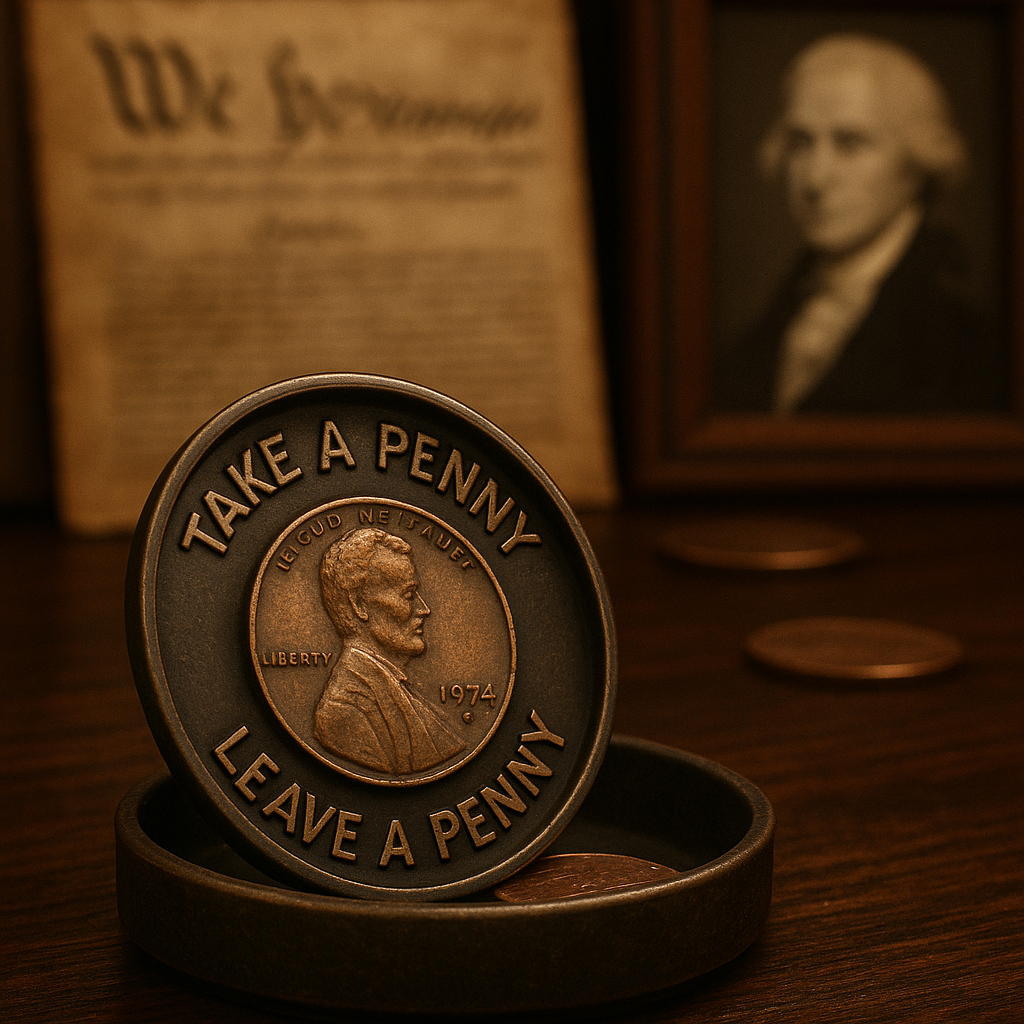
The end of the penny might seem like a small thing, but it symbolizes something much larger, the steady erosion of America’s money. While most people argue over rounding rules and pocket change, the real issue is that the dollar itself keeps losing value. Not because of bad luck, but because of the way our monetary system was redesigned in ways the Founders repeatedly warned against.
From Sound Money to Paper Promises
For the first century of the United States, money wasn’t just a number on paper, it was a tangible store of value. The Constitution gave Congress the power “to coin money, regulate the value thereof,” not to print limitless paper notes. The word coin mattered.
Article I, Section 10 goes even further, forbidding states from making “any Thing but gold and silver Coin a Tender in Payment of Debts.” The Founders wrote that after living through the collapse of the Continental dollar, the paper money issued during the Revolution that became so worthless it birthed the phrase “not worth a Continental.”
They didn’t fear money; they feared debt disguised as money.
George Washington saw the problem firsthand. In a 1787 letter to Jabez Bowen, he wrote, “Paper money has had the effect in your state that it ever will have, to ruin commerce, oppress the honest, and open the door to every species of fraud and injustice.”
Thomas Jefferson called it bluntly: “Paper is poverty… it is only the ghost of money, and not money itself.” And he warned, “It is liable to be abused, has been, is, and forever will be abused, in every country in which it is permitted.”
They weren’t theorizing. They had already seen what happens when a government prints what it cannot back.
The Drift Away from Discipline
Over time, those warnings faded, and convenience replaced caution.
In 1913, Congress created the Federal Reserve — a central bank with the power to expand credit and control interest rates. In 1933, during the Great Depression, citizens were prohibited from exchanging dollars for gold. And in 1971, President Richard Nixon permanently ended the gold standard, making the dollar a fiat currency, backed not by metal, but by trust in government policy.
From that point on, every dollar became a promise, not a product. And promises can always be rewritten.
Since leaving the gold standard, the dollar has lost over 85% of its purchasing power. What once bought a full cart of groceries now buys a single bag. Inflation isn’t just higher prices; it’s a quiet confession that the dollar itself is shrinking.
Printing Wealth That Doesn’t Exist
Modern monetary policy rests on the belief that debt can create prosperity. When the government spends more than it earns, it borrows the difference, often from the Federal Reserve, which simply creates new money to buy Treasury bonds.
That process expands the money supply, diluting the value of every existing dollar. You can’t print prosperity any more than you can stretch a blanket to make it cover two beds.
Thomas Paine captured this idea long before the Federal Reserve existed. Writing in 1786, he warned, “The depreciation of paper money is not the cause of the distress, but the effect of it. A people may as well expect to be rich by calling themselves so, as by issuing paper money.”
His words ring even truer today, when trillion-dollar budgets are financed by keystrokes instead of coins.
The Hidden Tax No One Votes For
Inflation acts as a silent tax. It transfers wealth from savers to borrowers, from workers to the institutions that issue credit. Every new dollar created without productivity behind it steals a fraction of purchasing power from every dollar already earned.
James Madison foresaw that effect too. In Federalist No. 44, he wrote that paper money undermines “the necessary confidence between man and man” and erodes “the character of republican government.” Money, he understood, isn’t just an economic tool, it’s a moral contract. When that contract breaks, trust follows.
Even Daniel Webster, speaking in the U.S. Senate in 1834, described paper currency as “the most effective contrivance for cheating the laboring classes of mankind.” He saw inflation for what it is, a quiet redistribution of wealth from those who earn it to those who create it from nothing.
From Cents to Sense
When you step back, the death of the penny is a small story inside a much bigger one. The coin became worthless not because of the Mint, but because of inflation. We printed our way to the point where one cent no longer matters.
Ending penny production was logical, but it should have reminded the country why the penny lost value in the first place. We stopped tying money to something real, and now it buys less every year.
The Founders tried to protect future generations from exactly this outcome. Washington warned it would invite “fraud and injustice.” Jefferson called it the “ghost of money.” Madison said it would destroy trust. And Paine, ever the realist, said it would make us believe we were rich just by saying so.
They all predicted what we live with today, a monetary system that drifts further from reality the more we try to control it.
The Real Fix
Fixing our money doesn’t mean going backward; it means returning to principles. Restraint. Accountability. A currency that represents value earned, not promises made.
Sound money doesn’t have to mean gold coins in your pocket, it means an economy where money is scarce enough to be meaningful. Where savings hold value. Where inflation isn’t a policy goal but a warning sign.
Until that balance returns, debates over pennies and rounding laws will stay distractions from the real issue: a dollar that buys less each decade, and a system that calls that progress.
The Founders didn’t just build a government; they built a warning label. We’d do well to start reading it again.
The penny has been part of American life for more than a century. A familiar constant stamped with history. As its final years pass, it’s worth remembering that value, once created, still leaves a mark long after it fades from circulation.
The penny may be gone, but value isn’t. You can still mint your own gold—without chasing friends or family. Check out the opportunity below and start building real wealth on your own terms.